



If your child’s dentist recommends laughing gas, you may wonder if it is safe, whether your child will sleep, and how they will feel afterward. Laughing gas for kids can lower fear while keeping children awake and responsive.
It can help a nervous child, but it is not needed for every visit. Knowing what happens can make the decision easier.
What Is Laughing Gas for Kids?
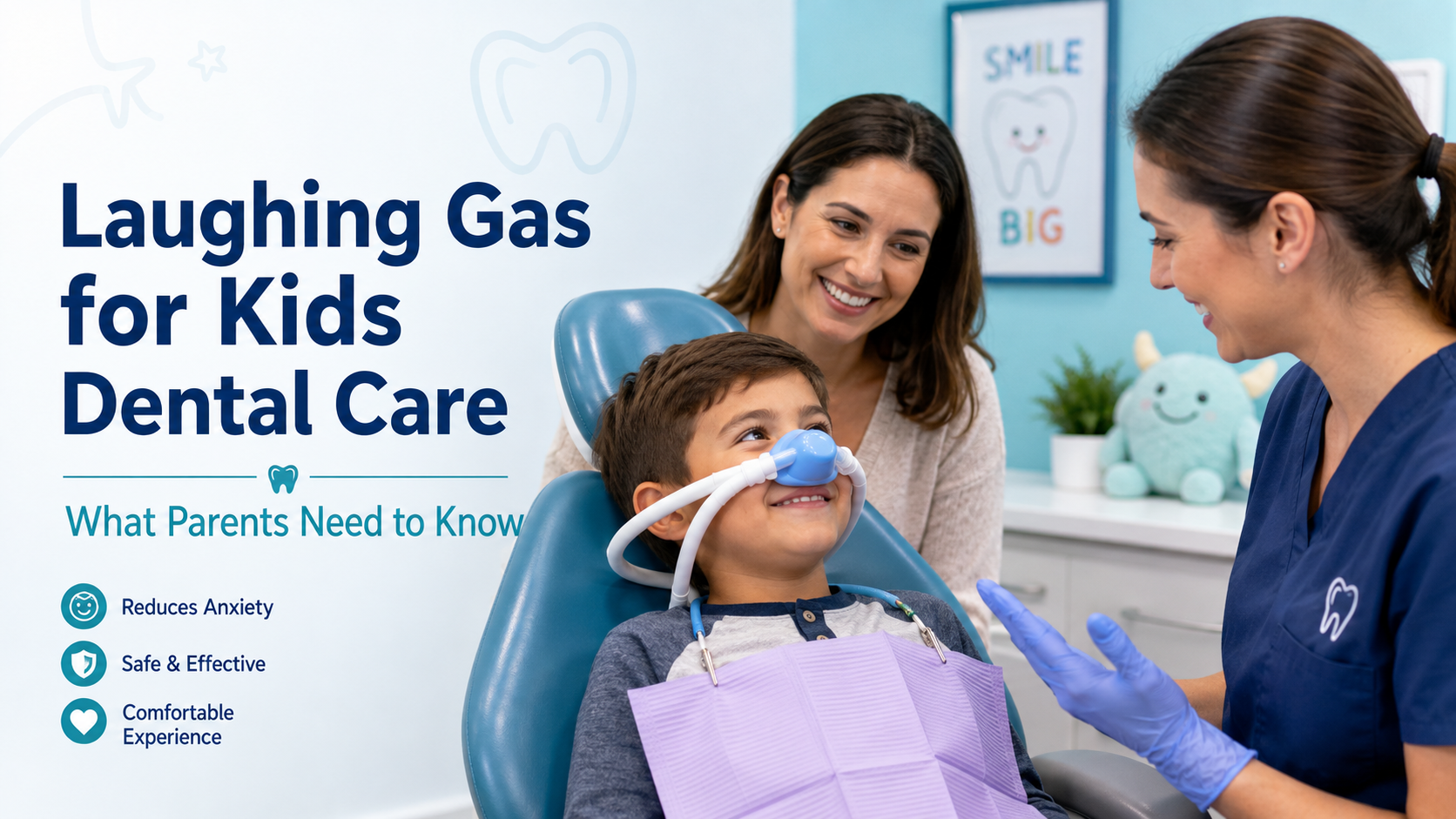
Laughing gas is breathed through a small mask over the nose. Dentists may call it nitrous oxide, but laughing gas is the familiar name. It is mixed with oxygen and usually starts working within minutes.
The goal is relaxation, not sleep. A child can hear the dentist, answer questions, and follow simple directions. Nitrous oxide in pediatric dentistry may be used during children’s dental care when fear makes treatment harder.
Is Laughing Gas Safe for Kids?
Parents often ask, “Is laughing gas safe for kids?” When used appropriately for the right child, it has a strong safety record. The American Academy of Pediatric Dentistry recognizes laughing gas with oxygen as a safe and effective way to reduce dental anxiety in children.
Before treatment, the dental team should review the child’s health history, medicines, recent illnesses, and planned work. The amount can be adjusted during the visit while the child remains responsive.
Dr. Naomi can guide parents through recent colds, past dental experiences, and other details that may affect whether laughing gas fits that appointment.
Why Dentists Recommend Laughing Gas
Dental anxiety in children may appear as crying, tense muscles, gagging, repeated questions, or trouble staying still. Laughing gas may help when a child is nervous but can still cooperate with support.
It can also help during longer care or a child’s dental filling, where staying relaxed may make the visit easier.
That does not mean every cavity needs laughing gas. A calm child who manages treatment well may not need it. The choice should match the child, the procedure, and the amount of support required.
What Kids Feel With Laughing Gas
Children describe the feeling differently. Some feel warm, light, tingly, floaty, or simply calmer. Despite the nickname, children do not always laugh.
Laughing gas at the dentist for a child usually keeps them awake and able to communicate. It also should not be confused with numbing. Laughing gas mainly helps with fear and comfort. If a procedure may hurt, the dentist may still numb the area.
This distinction matters for fillings and other pediatric restorative dental care.
Before, During, and After Laughing Gas
Knowing the steps ahead of time can make the visit feel more predictable.
Before the Visit
Follow the office’s food and drink instructions instead of a general internet rule. Tell the dental team about medicines, health concerns, a cold, or a blocked nose. Since the gas is breathed through the nose, heavy congestion can make it harder to use.
During the Visit
A small mask rests over the nose while the child breathes normally. The calming effect usually begins within minutes. The dentist can keep talking with the child and adjust the amount as needed.
After the Visit
When treatment ends, the laughing gas is stopped and oxygen is commonly given for several minutes. The relaxed feeling usually fades quickly. Follow separate aftercare instructions for the dental work, especially if the mouth remains numb.
When Laughing Gas May Not Fit
Laughing gas does not work equally well for every child. A blocked nose can prevent comfortable breathing through the mask. Some children dislike anything on their face, while others may be too frightened to follow simple directions.
It may also be too mild for very high fear or more involved dental work. In those situations, the dentist can discuss another way to complete needed care safely.
Parents should always mention recent illness, medicines, health conditions, and previous reactions before the visit.
How Parents Can Make the Visit Easier
Use simple language. Call it a “small nose mask that helps your body relax.” Tell your child they will stay awake and can talk with the dentist.
Avoid promising, “You won’t feel anything.” A child may still notice pressure, vibration, or the numbing step. Avoid sharing frightening stories from your own dental visits too.
Dr. Naomi can help parents choose age-appropriate words and clarify preparation instructions. Regular kids’ dental checkups may also help children become familiar with the dental setting before more involved care is needed.
Does Your Child Need Laughing Gas?
A nervous child who can wear the mask, breathe through the nose, and follow directions may do well with laughing gas. A relaxed child having simple care may not need it.
If a child has extreme fear, refuses the mask, or needs more involved treatment, a different plan may be better. Dr. Naomi can consider the child’s comfort, cooperation, dental needs, and past experiences before guiding parents through the options.
The goal is not the strongest option. It is enough support to help the child receive needed care safely and comfortably.
Making the Right Choice
Laughing gas can make dental treatment easier for children who need help managing fear, but it is not required for every child or every cavity. Ask why it is recommended, whether numbing is also needed, what your child should do beforehand, and what the backup plan is.
Clear answers help parents choose based on their child’s actual needs instead of fear of the unknown.
Why Choose Lil' Dente Pediatric Dentistry?
Lil' Dente Pediatric Dentistry focuses on making dental visits easier to understand for both children and parents. Families receive clear guidance about comfort options, preparation, and what to expect during treatment. The goal is thoughtful care matched to each child’s needs, so parents can make informed choices with confidence together.
Frequently Asked Questions
What If Laughing Gas Does Not Calm My Child?
If laughing gas does not provide enough comfort, the dentist should reassess rather than force the visit. The next step depends on your child’s fear, ability to cooperate, treatment needs, and response to the mask.
How Long Does Laughing Gas Last in Children?
Laughing gas works only while it is being breathed in and usually wears off within minutes after it stops. Children commonly receive oxygen afterward, and most feel like themselves again soon after the visit.
Can My Child Eat Before Laughing Gas?
Food instructions can differ by office and procedure. Follow the dentist’s directions for your child’s visit. Heavy meals may increase nausea for some children, so do not rely on a one-size-fits-all fasting rule.
What Age Can a Child Have Laughing Gas?
There is no single age that fits every child. Dentists consider whether the child can comfortably wear the nose mask, breathe through the nose, follow simple directions, and handle the planned dental treatment.
Does Laughing Gas Put Kids to Sleep?
No. Laughing gas for kids is designed to help them relax while staying awake and responsive. A child can usually hear the dentist, answer questions, and follow directions throughout the dental visit safely.


.jpg)


.svg)
.svg)


.svg)